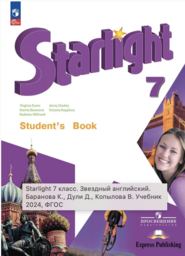

Решебник по английскому языку язык 7 класс Баранова | Страница 88

Авторы:
Год:2025
Тип:учебник
Серия:Starlight: Student's Book

Страница 88

Содержание

5f Changes in life

Vocabulary Stages in life

1. a) Listen and say. At which stage: are you? is your teacher? has your parents? is your uncle? are your neighbours' kids? (Послушайте и скажите. На какой стадии: вы? ваш учитель? ваши родители? ваш дядя? соседские дети?)

Stage (Стадия) Age (Возраст) Example Person (Пример человека) Translation (Перевод)
infant (1-12 months) My neighbour’s kid is an infant. младенец
toddler (1-2 years) My neighbour’s kid is a toddler. ребенок, начинающий ходить
child (2-12 years) I am a teenager, but I have a younger sibling who is a child. ребенок
teenager (13-19 years) I am a teenager. подросток
adult (20-40) My uncle is an adult. взрослый
middle-aged (40+) My teacher is middle-aged. среднего возраста
elderly (60+) My grandparents are elderly. пожилой

2. Use the phrases below to describe the pictures in Ex. 1. (Используйте приведенные ниже фразы для описания картинок в упр. 1.)

  1. get → get married/ get a job / get a promotion / get divorced / get a degree (жениться/выйти замуж / получить работу / получить повышение / развестись / получить степень)

       Вернуть оригинал
  2. have → have children/grandchildren (иметь детей/внуков)

       Вернуть оригинал
  3. buy → buy a house/a car/a boat/land/property (купить дом/машину/лодку/землю/имущество)

       Вернуть оригинал
  4. go → go to kindergarten/school/college/university (пойти в детский сад/школу/колледж/университет)

       Вернуть оригинал
  5. attend → attend someone's wedding/retirement party/funeral (посетить чью-то свадьбу/вечеринку по случаю выхода на пенсию/похороны)

       Вернуть оригинал

Reading

3. What do you know about Hindu weddings? What would you like to know? Write down three questions. Now listen to and read the text. Can you find the answers to your questions? (Что вы знаете об индуистских свадьбах? Что бы вы хотели узнать? Запишите три вопроса. Теперь послушайте и прочитайте текст. Можете ли вы найти ответы на свои вопросы?)

Questions I would like to know (Вопросы, которые я хотел бы узнать):

   Вернуть оригинал
  1. How long does a typical Hindu wedding last? (Как долго обычно длится индуистская свадьба?)

       Вернуть оригинал
  2. What is the significance of the red and gold clothing? (Каково значение красной и золотой одежды?)

       Вернуть оригинал
  3. Do the bride and groom exchange rings? (Обмениваются ли жених и невеста кольцами?)

       Вернуть оригинал

Answers based on the text (Ответы, основанные на тексте):

   Вернуть оригинал
  1. The celebrations last for several days (the Sangret was the first night, the Mehdni was the next afternoon, and the wedding ceremony was the next morning). (Празднование длится несколько дней (Сангрет был первой ночью, Менди — следующим днем, а свадебная церемония — следующим утром). )

       Вернуть оригинал
  2. The red and gold clothing is significant because the bride's colour red symbolises fertility and prosperity. (Красная и золотая одежда значима, потому что красный цвет невесты символизирует плодородие и процветание.)

       Вернуть оригинал
  3. The text does not mention whether the bride and groom exchange rings. (В тексте не упоминается, обмениваются ли жених и невеста кольцами.)

       Вернуть оригинал

Cтр. 89

4. Read the text again and for questions 1-5, choose the best answer A, B, C or D. (Прочитайте текст еще раз и для вопросов 1-5 выберите лучший ответ A, B, C или D.)

  1. The writer wanted to go to the wedding because → D. she had always wanted to go to India. (она всегда хотела поехать в Индию.) Evidence: The narrator was already living in India and only decided to go to the wedding because her friend invited her. The best answer is B. her best friend Alisha was the bride. (*Ее лучшая подруга Алиша была невестой.) Final Choice: B. her best friend Alisha was the bride.

       Вернуть оригинал
  2. The writer got stuck in traffic → A. on a rickshaw. (на рикше.) Evidence: "The rickshaw bumped along our way and then we got stuck in the traffic of the big city." (Рикша тряслась по дороге, а затем мы застряли в пробке большого города.)

       Вернуть оригинал
  3. At the Sangreet, the guests → C. took part in different dances. (* принимали участие в разных танцах.) Evidence: "Everyone in the room danced, wearing beautifully coloured multi-coloured saris. One of Alisha's aunts even pulled me up to dance." (Все в комнате танцевали, и одна из тетушек Алиши даже вытащила меня танцевать.)

       Вернуть оригинал
  4. At the wedding, the writer seems to have been most impressed by → D. the food. (* едой.) Evidence: "The food, however, was my favourite. Then, it was time for more dancing. Thankfully, this time I didn't seem to embarrass myself so much!" (Еда, однако, была моей любимой. Потом пришло время для танцев. К счастью, на этот раз я, похоже, не смущался так сильно!)

       Вернуть оригинал
  5. The writer suggests that by the end of the celebrations, → E. her dancing skills had improved. → *The text says: "The dancing and acrobatics were fantastic, too... The dancers were amazing!" The end of the story says: "Thankfully, this time I didn't seem to embarrass myself so much!" → The best choice is E. → C. it got very hot. → The writer says: "It was a steaming/simmering hot day." → B. She felt awkward. Final Choice: A. her dancing skills had improved. (Ее танцевальные навыки улучшились - подразумевается, что она стала меньше смущаться.)

       Вернуть оригинал

5. Choose the correct word. Check in your dictionaries. (Выберите правильное слово. Проверьте в своих словарях.)

  1. He leapt/hopped at the chance of travelling to India. → He leapt at the chance of travelling to India. (Он ухватился за шанс поехать в Индию.)

       Вернуть оригинал
  2. It was a steaming/simmering hot day that we decided to go to the beach. → It was a steaming hot day that we decided to go to the beach. (Был палящий жаркий день, когда мы решили пойти на пляж.)

       Вернуть оригинал
  3. She greeted/waved us with a big warm smile. → She greeted us with a big warm smile. (Она поприветствовала нас большой теплой улыбкой.)

       Вернуть оригинал
  4. She isn't used to the hustle and bustle/bubble of the big city. → She isn't used to the hustle and bustle of the big city. (Она не привыкла к суете и шуму большого города.)

       Вернуть оригинал
  5. The party took/lasted until the early hours. → The party lasted until the early hours. (Вечеринка длилась до раннего утра.)

       Вернуть оригинал
  6. I felt very clumsy/awkward in the long red dress. → I felt very awkward in the long red dress. (Я чувствовал себя очень неловко в длинном красном платье.)

       Вернуть оригинал
  7. He made a spectacular entry/entrance on a white horse. → He made a spectacular entry on a white horse. (Он совершил зрелищный выход на белом коне.)

       Вернуть оригинал
  8. It was the best holiday we've ever felt/experienced. → It was the best holiday we've ever experienced. (Это был лучший отпуск, который мы когда-либо переживали.)

       Вернуть оригинал

6. Complete with: flower, steaming, wedding, future, hustle, fairytale, multi-coloured, marching. Use the completed phrases to make sentences about the wedding. (Завершите: цветок, пропаривающий, свадьба, будущее, суета, сказочный, многоцветный, марширующий. Используйте завершенные фразы для составления предложений о свадьбе.)

  1. hot day → steaming hot day (палящий жаркий день) Sentence: It was a steaming hot day when the wedding took place. (Был палящий жаркий день, когда состоялась свадьба.)

       Вернуть оригинал
  2. and bustle → hustle and bustle (суета и шум) Sentence: The hustle and bustle of the city was a shock to the writer. (Суета и шум города шокировали писателя.)

       Вернуть оригинал
  3. wedding celebrations → свадебные торжества Sentence: The wedding celebrations lasted for several days. (Свадебные торжества длились несколько дней.)

       Вернуть оригинал
  4. a fairytale future → сказочное будущее Sentence: The bride and groom hope for a fairytale future together. (Жених и невеста надеются на сказочное будущее вместе.)

       Вернуть оригинал
  5. flower garlands → цветочные гирлянды Sentence: There were lots of flower garlands around the ceremony. (Цветочных гирлянд было много вокруг церемонии.)

       Вернуть оригинал
  6. a multi-coloured sari → многоцветное сари Sentence: The guests wore multi-coloured saris for the Sangreet. (Гости надели многоцветные сари на Сангрет.)

       Вернуть оригинал
  7. marching band → марширующий оркестр Sentence: A marching band led the groom's entrance. (Марширующий оркестр вел вход жениха.)

       Вернуть оригинал
  8. a future groom → будущий жених Sentence: The narrator met the future groom on the day of the wedding. (Рассказчик встретил будущего жениха в день свадьбы.)

       Вернуть оригинал

Grammar

to-infinitive/-ing form (Tenses)

7. a) In a minute write six verbs/phrases that go with: (to) infinitive, -ing form. (За минуту напишите шесть глаголов/фраз, которые сочетаются с: (to) infinitive, -ing формой.)

(to) Infinitive (С частицей to) -ing Form (Герундий)
1. want to (хотеть) 1. avoid (избегать)
2. hope to (надеяться) 2. enjoy (наслаждаться)
3. decide to (решить) 3. mind (возражать)
4. plan to (планировать) 4. don't mind (не возражать)
5. need to (нуждаться) 5. start (начать)
6. try to (пытаться) 6. finish (закончить)

b) Read the table. Find examples in the text. (Прочитайте таблицу. Найдите примеры в тексте.)

  • to infinitive (С частицей to):

    • "I wanted to go with her..." (Я хотел поехать с ней...)

         Вернуть оригинал
    • "I decided to go to the Chinese opera..." (Я решил пойти на китайскую оперу...)

         Вернуть оригинал
    • "...I didn't seem to embarrass myself so much." (...Я не показался таким смущенным.)

         Вернуть оригинал
  • -ing form (Герундий):

    • "...people enjoy bathing..." (...людям нравится париться/купаться...)

         Вернуть оригинал
    • "I love the dancing..." (Я люблю танцы...)

         Вернуть оригинал

8. Choose the correct verb forms. (Выберите правильные глагольные формы.)

  1. Ann hopes to go/going to the wedding. → Ann hopes to go to the wedding. (Энн надеется поехать на свадьбу.)

       Вернуть оригинал
  2. Sally seems enjoying/to be enjoying her new job. → Sally seems to be enjoying her new job. (Салли, похоже, наслаждается своей новой работой.)

       Вернуть оригинал
  3. The curry was too hot eating/to eat to eat. → The curry was too hot to eat. (Карри было слишком горячим, чтобы его есть.)

       Вернуть оригинал
  4. Mark claims to have been/having been away from home on the night of the fire. → Mark claims to have been away from home on the night of the fire. (Марк утверждает, что отсутствовал дома в ночь пожара.)

       Вернуть оригинал
  5. Mike can't stand dancing/to dance to dance. → Mike can't stand dancing. (Майк терпеть не может танцевать.)

       Вернуть оригинал
  6. John denied to have told/having told a lie. → John denied having told a lie. (Джон отрицал, что солгал.)

       Вернуть оригинал
  7. They appear to walk/to be walking around the fire. → They appear to be walking around the fire. (Они, кажется, ходят вокруг костра.)

       Вернуть оригинал
  8. After to have eaten/having eaten the wedding guests started to sing and dance. → After having eaten, the wedding guests started to sing and dance. (После того, как поели, свадебные гости начали петь и танцевать.)

       Вернуть оригинал

Speaking & Writing

9. Look at the pictures from Ex. 1 and make speculations about them. Use seem, tend, appear and appropriate infinitive forms. (Посмотрите на картинки из упр. 1 и постройте предположения о них. Используйте seem, tend, appear и подходящие формы инфинитива.)

Предположения о жизненных событиях (Speculations about Life Events)

   Вернуть оригинал
  1. Picture 1: Graduate from university (Окончание университета)

       Вернуть оригинал
    • They seem to be very happy about graduating. (Они, кажется, очень рады окончанию учебы.)

         Вернуть оригинал
    • They appear to have found good jobs already. (Они, по-видимому, уже нашли хорошую работу.)

         Вернуть оригинал
    • They tend to celebrate big milestones like this with their whole class. (Они склонны праздновать такие важные события всем классом.)

         Вернуть оригинал
  2. Picture 2: Get a job (Получить работу)

    • The man appears to be greeting his new boss. (Мужчина кажется, приветствует своего нового начальника.)

         Вернуть оригинал
    • He seems to have gotten a promotion recently. (Он, кажется, получил повышение недавно.)

         Вернуть оригинал
    • He tends to work hard to get what he wants. (Он склонен работать усердно, чтобы получить то, что хочет.)

         Вернуть оригинал
  3. Picture 3: Move house (Переезд)

    • The family seems to be getting ready to move to a bigger city. (Семья, кажется, готовится к переезду в большой город.)

         Вернуть оригинал
    • They appear to have bought their own house. (Они, по-видимому, купили свой собственный дом.)

         Вернуть оригинал
    • They tend to move house every few years. (Они склонны переезжать каждые несколько лет.)

         Вернуть оригинал
  4. Picture 5: Get married (Жениться/Выйти замуж)

       Вернуть оригинал
    • They seem to be a very loving couple. (Они, кажется, очень любящая пара.)

         Вернуть оригинал
    • She appears to be wearing her wedding dress. (Она, по-видимому, одета в свое свадебное платье.)

         Вернуть оригинал
    • They tend to go on holiday after the wedding. (Они склонны уезжать в отпуск после свадьбы.)

         Вернуть оригинал
  5. Picture 6: Retire (Выход на пенсию)

    • The woman seems to be enjoying her retirement very much. (Женщина, кажется, наслаждается своим выходом на пенсию.)

         Вернуть оригинал
    • She appears to have started a new hobby. (Она, по-видимому, начала новое хобби.)

         Вернуть оригинал
    • Older people tend to lead a much more relaxed life. (Пожилые люди склонны вести гораздо более расслабленную жизнь.)

         Вернуть оригинал

10. THINK! In three minutes write a few sentences comparing a typical wedding in Russia to the Indian wedding in the text. Tell your partner. (За три минуты напишите несколько предложений, сравнивающих типичную свадьбу в России с индийской свадьбой из текста.)

Comparison of Russian and Indian Weddings (Сравнение русской и индийской свадеб)

   Вернуть оригинал
Aspect (Аспект) Indian Wedding (Индийская свадьба) Russian Wedding (Русская свадьба)
Duration (Продолжительность) Several days of celebrations (Sangreet, Mehndi, Wedding). (Несколько дней торжеств.) Usually one or two days (main ceremony and banquet). (Обычно один или два дня.)
Colour/Attire (Цвет/Одежда) Bride wears red and gold sari (symbolising prosperity). Guests wear multi-coloured saris. (Невеста носит красно-золотое сари. Гости носят многоцветные сари.) Bride wears a white dress. Groom wears a suit. Guests wear formal attire (dresses/suits). (Невеста носит белое платье. Жених носит костюм. Гости носят формальную одежду.)
Ceremony (Церемония) Groom makes a spectacular entry with a marching band on a white horse. Focus on rituals and tradition. (Жених совершает зрелищный выход с марширующим оркестром на белом коне. Акцент на ритуалах и традициях.) Focus on the official registration and a large banquet (tamada, toasts, games). (Акцент на официальной регистрации и большом банкете (тамада, тосты, игры).)
Mood (Настроение) Very traditional, exciting, and loud. (Очень традиционно, захватывающе и громко.) Festive, fun, often involves singing and dancing, but less about grand, public entries. (* Празднично, весело, часто включает пение и танцы, но меньше помпезных публичных выходов.*)
Скачать ответ
ГДЗ по фото 📸
Решебники по другим предметам