
 Алгебра
 Английский
 Биология
 География
 Геометрия
 История
 Русский
 Обществознание
 Физика
 Химия
Химия Информатика
 Литература
 Математика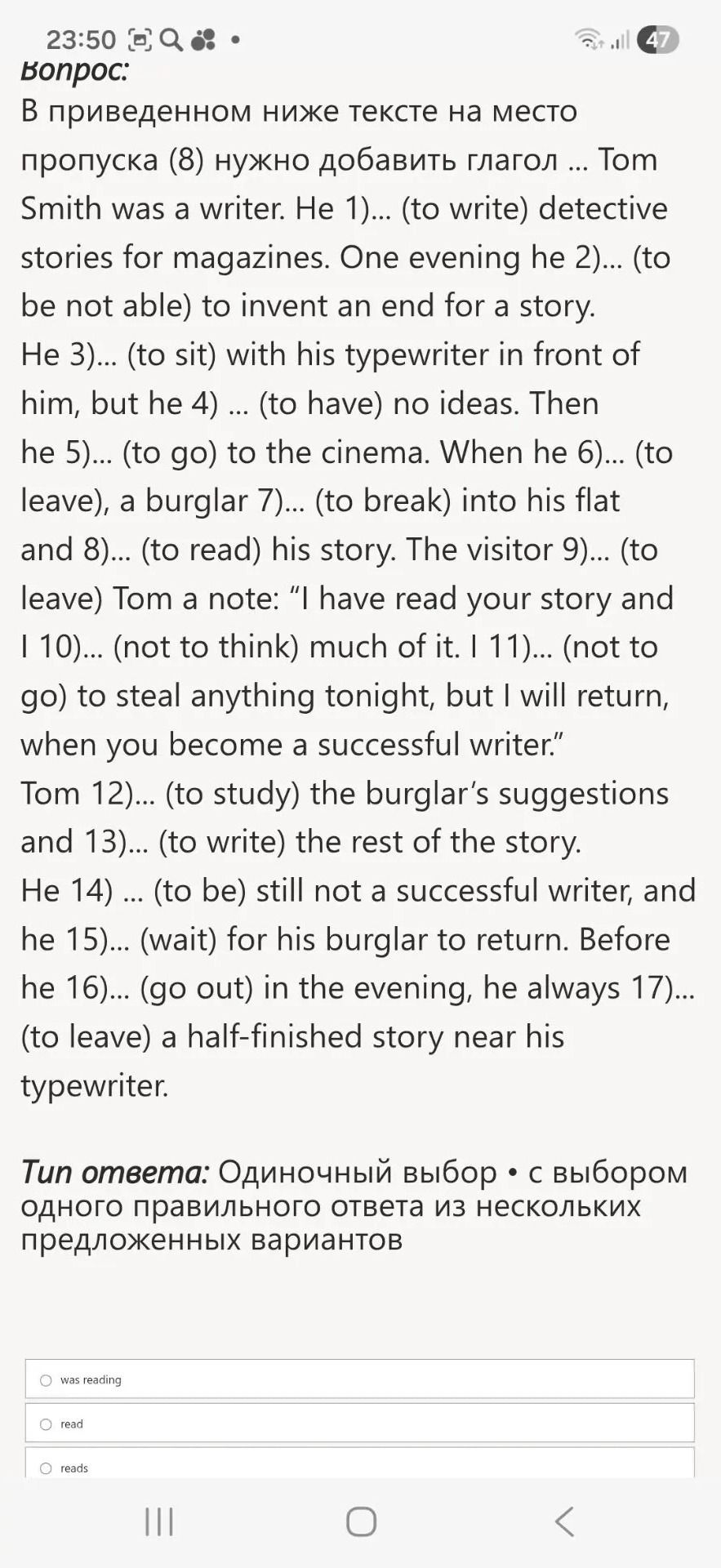
Ответ:
Решение:
Для правильного заполнения пропусков необходимо преобразовать глаголы в нужную форму, учитывая контекст предложения.
- He wrote detective stories for magazines.
- One evening he was unable to invent an end for a story.
- He sat with his typewriter in front of him, but he had no ideas.
- Then he went to the cinema.
- When he left, a burglar broke into his flat and read his story.
- The visitor left Tom a note: "I have read your story and I do not think much of it. I will not go to steal anything tonight, but I will return, when you become a successful writer."
- Tom studied the burglar's suggestions and wrote the rest of the story.
- He was still not a successful writer, and he waited for his burglar to return.
- Before he went out in the evening, he always left a half-finished story near his typewriter.
Ответ: 1. wrote, 2. was unable, 3. sat, 4. had, 5. went, 6. left, 7. broke, 8. read, 9. left, 10. do not think, 11. will not go, 12. studied, 13. wrote, 14. was, 15. waited, 16. went out, 17. left.
