
 Алгебра
 Английский
 Биология
 География
 Геометрия
 История
 Русский
 Обществознание
 Физика
 Химия
Химия Информатика
 Литература
 Математика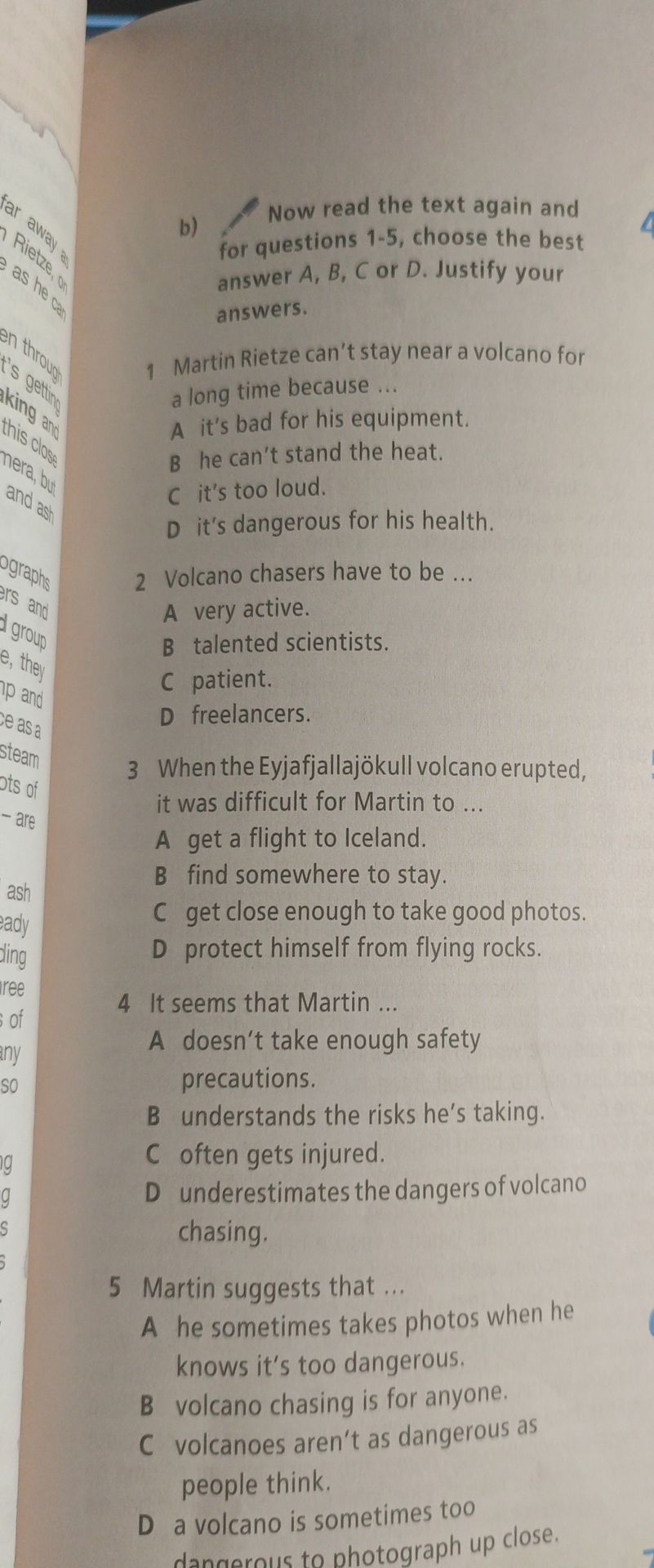
Ответ:
Перевод задания: Снова прочитайте текст и для вопросов 1–5 выберите лучший ответ A, B, C или D. Обоснуйте свои ответы.
- A — it’s bad for his equipment. (это плохо для его оборудования). Длительное пребывание рядом с вулканом может повредить фотооборудование.
- C — patient. (терпеливыми). Охотникам за вулканами приходится ждать подходящего момента и условий.
- C — get close enough to take good photos. (подойти достаточно близко, чтобы сделать хорошие фотографии). Извержение сделало приближение к вулкану трудным и опасным.
- B — understands the risks he’s taking. (понимает, каким рискам подвергается). Мартин осознаёт опасность своей работы.
- A — he sometimes takes photos when he knows it’s too dangerous. (иногда он фотографирует, даже когда знает, что это слишком опасно). Это показывает, что ради удачного снимка он порой принимает чрезмерный риск.
Ответ: 1 — A; 2 — C; 3 — C; 4 — B; 5 — A.
